The Same Fate Across Different Times and Places: The Cost of Institutional Neglect
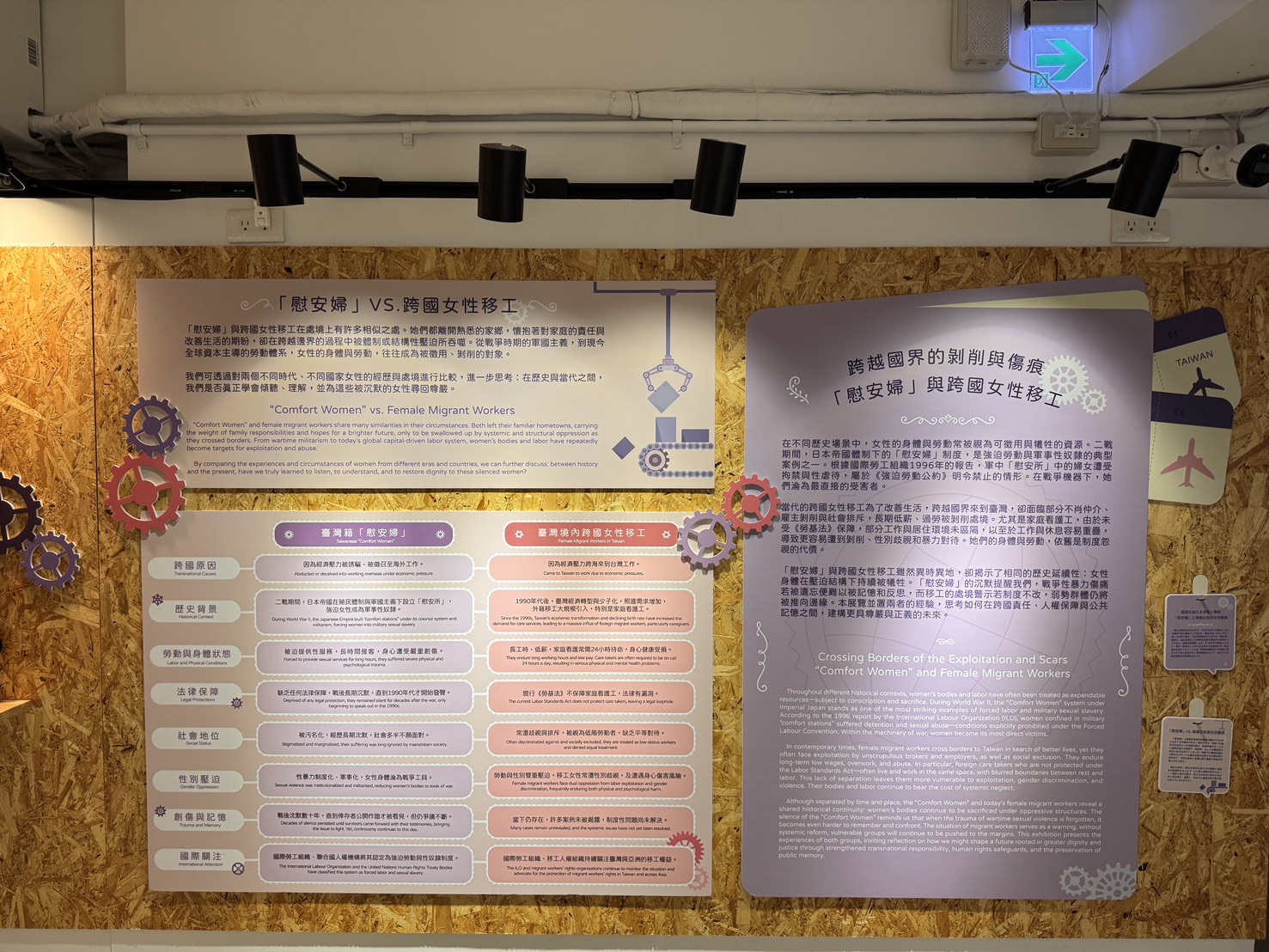
TWRF points out that whether it is the "comfort women" who were reduced to "military sexual slaves" under the Japanese imperial system during WWII, or the transnational female migrant workers facing exploitation in Taiwan today, their initial intention was often the same: seeking job opportunities through transnational migration to improve their families' livelihoods and pursue a better life. However, caught in the cracks of gender and class, they frequently became resources requisitioned and sacrificed by the system.
Reflecting from an International Perspective: Labor Exploitation and Friendly Workplaces
The exhibition begins with the history of Taiwanese women during WWII who worked across borders for their families' livelihood, only to be deceived into becoming "comfort women." It then introduces the definition by the International Labour Organization (ILO), pointing out that workers are most vulnerable to exploitation when they lack choices, face language barriers, and have insufficient social support. This connection illustrates that "comfort women" were not only military sexual slaves but also victims of severe labor and sexual exploitation—a plight strikingly similar to that of female migrant workers currently suffering from the same abuses. The exhibition emphasizes that social justice and sustainability can only be realized by establishing "friendly workplaces" that respect human rights and guarantee fair wages and a safe environment.

Their Stories, Inviting the Younger Generation: Breaking the Silence and Reclaiming Dignity
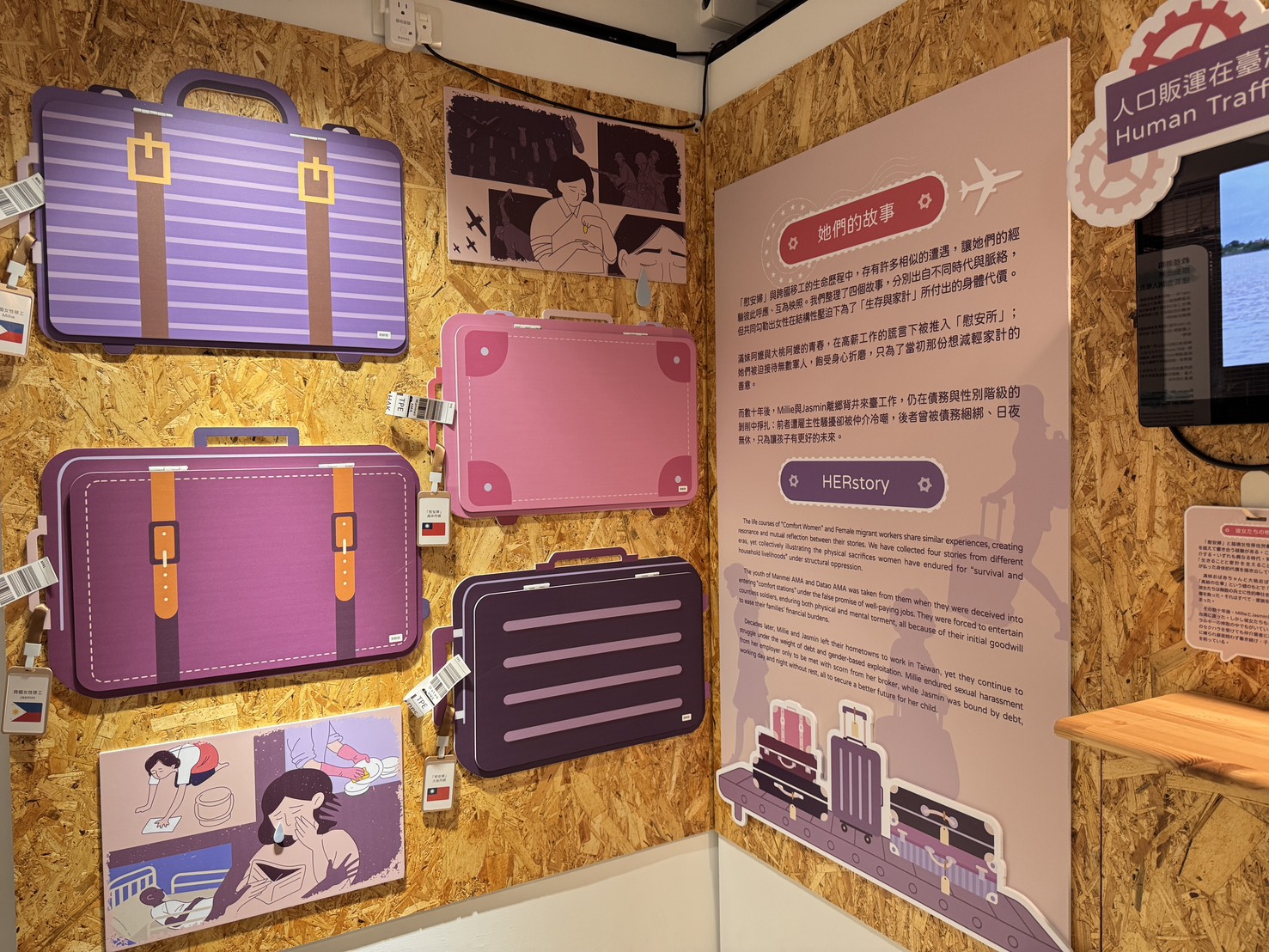
To resonate with younger demographics, the special exhibition presents the life journeys of two "Amas" (survivors of military sexual slavery) and two female migrant workers. Though coming from different eras and contexts, their stories collectively outline the profound physical toll exacted from women striving for "survival and family livelihood" under structural oppression.
- Ama Da-Tao: Pushed into a "comfort station" under the false promise of a high-paying job, she suffered profound physical and mental torment—all stemming from her initial good intention to ease her family's financial burden.
- Jasmin: Leaving her hometown to work in Taiwan, she was once bound by debt and worked day and night without rest, simply to give her children a better future.
The exhibition features interactive questions, inviting visitors to put themselves in these women's shoes: How would we persevere when faced with discrimination, loneliness, or overtime requests that are hard to refuse? And how would we hope those around us might lend a helping hand?
TWRF states that the history of "comfort women" reminds us that the violence of war should never be forgotten, while the plight of migrant workers warns us of the urgency of institutional reform. The public is invited to step into the exhibition, closely observe these life journeys, and allow these sorrowful echoes across borders to transform into the strength to protect human rights.
[ Exhibition Information ]
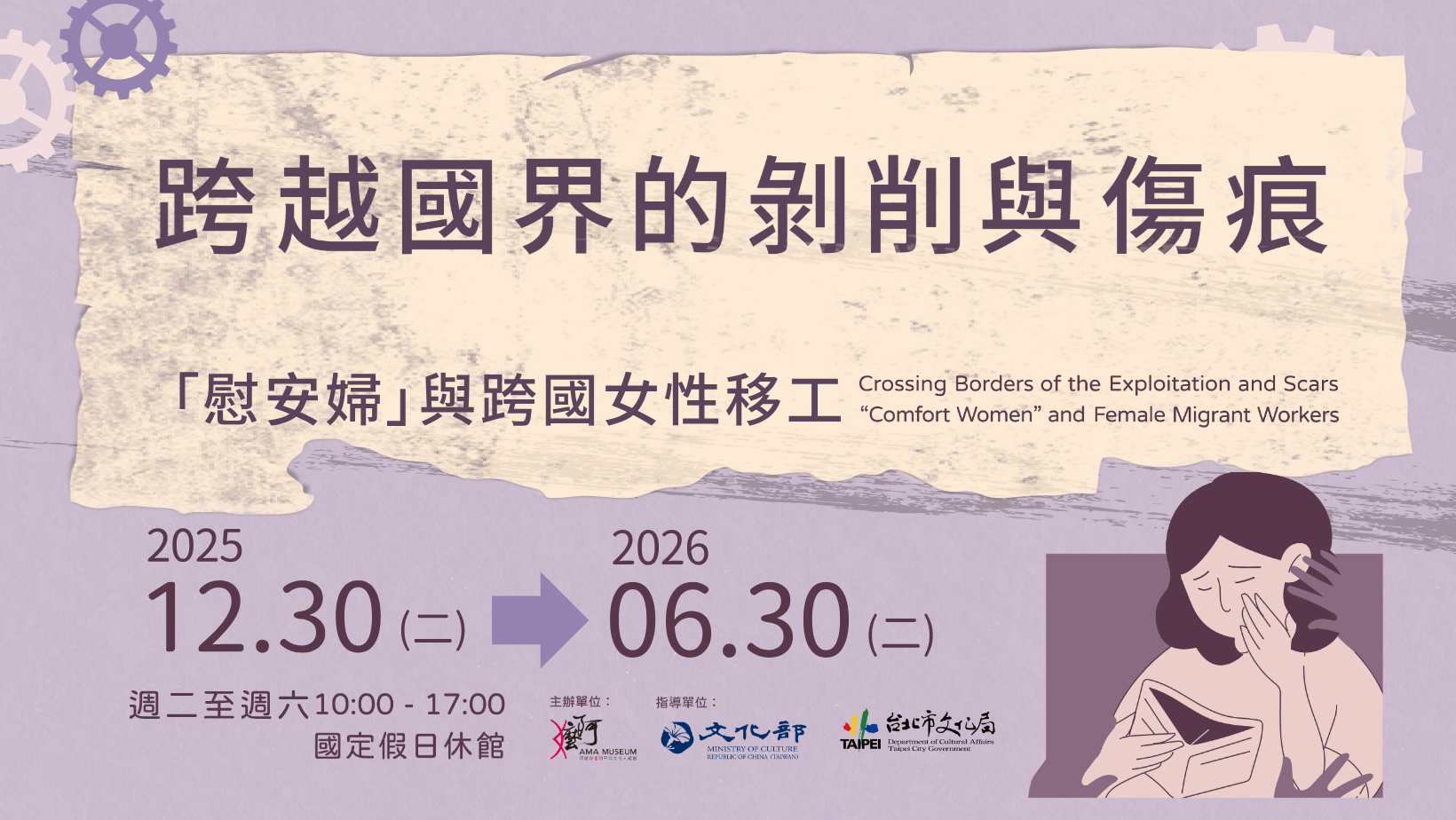
- Theme: Crossing Borders of the Exploitation and Scars “Comfort Women” and Female Migrant Workers
- Dates: December 30, 2025 – June 30, 2026
- Hours: Tuesday to Saturday, 10:00 AM – 5:00 PM
- Location: AMA Museum for Peace and Women's Human Rights Museum (5F, No. 32, Sec. 3, Chengde Rd., Datong Dist., Taipei City)